
Why Employers Ask About Salary Expectation?
Salary expectation questions are one of the most common—and sometimes uncomfortable—parts of an interview. Understanding why employers ask this question can help you answer it confidently and strategically.
1.1 Understand the Employer’s Purpose
Employers ask about salary expectations to understand your priorities and whether you are a good fit for the role and the company’s budget. They want to know:
- If your expectations match what the company can offer
- If you value your skills appropriately
- If you are realistic about your market worth
This is not just about money—it’s also a way for them to gauge your self-awareness and professional maturity.
1.2 How They Use It to Check Budget Fit and Assess Confidence
Your answer helps the employer determine if hiring you is feasible within their budget. At the same time, it reflects your confidence in your skills and experience. A candidate who answers confidently and strategically shows that they understand their value and the market, which builds trust with the employer.
1.3 Why Wrong Answers Can Lead to Rejection or Underpayment
Undervaluing yourself: Giving a number too low may make you appear inexperienced or unconfident, and you could end up earning less than you deserve.
Overquoting: Asking for a salary far above market standards may make the employer think you are unrealistic or difficult to negotiate with.
Appearing indecisive: Not answering clearly can make you seem unprepared or uncertain, which can reduce your chances of progressing in the interview.
By understanding the purpose behind the question, you can answer thoughtfully, position yourself as a strong candidate, and leave room for expectation.
Why Salary Expectation Matters?
Salary expectation does not only mean asking for more money, but it means asking for the real value of your work. When you negotiate, you are sitting on a strong financial base for yourself, on which increments, bonuses, and promotions are calculated in the future. If you take 5,000 to 10,000 extra, then the small difference creates a huge gap, it is called the compound effect.
Many people think expectation means becoming greedy, but it’s not like that, it is a professional way to get the real value of your work. And employers appreciate when you negotiate and understand what you are worth and are confident in. If you do not negotiate, that means you are not accepting growth in your career. That’s why you should not avoid expectation.
Know about salary expectation in detail here.
How to Smartly Answer Salary Expectation Questions?
1. Researching salary ranges before the interview
Before negotiating your salary you have to be aware of the market rate of your role. To understand the market rate, you can use free tools like Glassdoor, Payscale, and LinkedIn Salary.
- With the help of the Glassdoor free tool, you can see the location-wise and company-wise salary range.
- You can take a salary report by using your skills, experience, and job role in the pay scale.
- LinkedIn provides an idea of the industry average and its benefits.
This research gives you confidence to speak with facts during the time of expectation. When you have data then instead of “I think” you can use “according to market data”.
Before stepping into any salary expectation, it’s important to research industry salary standards and company-specific ranges. You can explore my article on Best Job Tools for Career Changers to find platforms that help you compare salaries, understand market value, and prepare better for your discussions.
2. Understanding your value beyond your job title
Your worth is not decided solely by your job title. A combination of skills, experience, and results defines your real value. For example, if your title is “Marketing Executive,” but you increased sales by 30%, implemented new tools, or ran campaigns with high ROI on a low budget — your value can be higher than the market average.
The best way to impress employers is to showcase the measurable results of your work. Saying “I am hardworking” is less powerful than saying “I increased team productivity by 25% in one year.” This combination of skills, experience, and results gives you a strong position in expectation.
The stronger your skills, the more value you bring to the table during expectations.
3. Building a “value pitch” with specific examples
Value pitch means a short but powerful statement that clearly conveys the value of your work. You can convince an employer by using a mix of your skills, achievements, and results to tell them that you are a good fit for their company. For example, in the previous year, I increased 40% brand awareness and reduced 20% cost of leads. By giving specific examples it feels real and credible instead of looking generic. Add a reference to market salary data in your pitch to prove your words. Practice pitch so that at the time of expectation, you speak confidently.
4. How to answer when you want a higher salary
Tone and freezing methods are used a lot during salary expectations. It becomes easy for the employer to consider you if you request positively and in a professional manner. For example, instead of saying “I feel the salary is very low,” you should say “Based on my skills and market data, I believe a salary of ₹X would reflect my value better”. You look collaborative with positive phrasing not demanding. Your every point should be in a solution-oriented tone to keep the conversation constructive. This keeps a friendly mood during the expectation.
Facts work more than emotions at the time of expectation. If you will say I think I deserve more than it will feel like a personal opinion, but instead, if you will say, “According to market research, the average for this role is ₹X, and in my earlier performance, I increased the sales by 25%” it will feel more like a fact. If you say this, then it will become a solid database argument. Fat convinces the employer because it is measurable, verifiable, and unbiased. When you use a mix of data and achievement then your worth proves logically.
5. How to avoid undervaluing yourself
Facts work more than emotions at the time of expectation. If you will say I think I deserve more than it will feel like a personal opinion, but instead, if you will say, “According to market research, the average for this role is ₹X, and in my earlier performance, I increased the sales by 25%” it will feel more like a fact. If you say this, then it will become a solid database argument. Fat convinces the employer because it is measurable, verifiable, and unbiased. When you use a mix of data and achievement then your worth proves logically.
Tone and freezing methods are used a lot during salary expectations. It becomes easy for the employer to consider you if you request positively and in a professional manner. For example, instead of saying “I feel the salary is very low,” you should say “Based on my skills and market data, I believe a salary of ₹X would reflect my value better”. You look collaborative with positive phrasing not demanding. Your every point should be in a solution-oriented tone to keep the conversation constructive. This keeps a friendly mood during the expectation.
6. Sample answers for some scenario
“We don’t have budget” – how to respond
If the employer says that they do not have a budget, then this doesn’t mean that expectation is not possible. You can calmly respond to discuss alternative options. First acknowledge their limitations, then repeat your value point, like your achievement, market salary data, and the impact of your work. For example, say “I understand the budget constraints, but considering the value I bring, can we explore other forms of compensation or plan for a salary review in the next 6 months?” If you speak this way, then you will look flexible, and the doors of the future Hike will be open. You have to keep in mind that expectation doesn’t always mean to increase your salary; sometimes it is also referred to as securing better terms.
“This is the best we can offer” – negotiating non-monetary benefits
When the employer says, “This is the best we can offer,” that means the chances of increasing salary are low, but this doesn’t mean the conversation has ended. In this situation, you can negotiate non-monetary benefits. For example, you can request flexible work, extra vacation days, paid training programs, professional development courses, help benefits, or even a signing bonus. You can say, “If the salary can’t be adjusted, would it be possible to consider additional benefits such as remote work days or support for skill development?” By this, you can show the employer that you appreciate value, but you are also proactive in your growth.
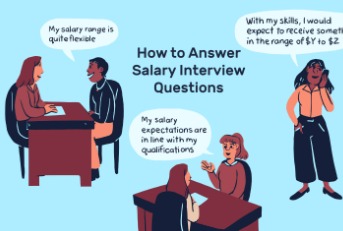
7. How to answer when you don’t know your exact salary expectation
Many candidates, especially freshers or those switching careers, often struggle to give a precise salary figure. It’s completely normal to feel unsure, but the key is to respond confidently and strategically without locking yourself into a number too early. Here’s how you can handle this situation smartly:
- Give a Smart Neutral Answer
Instead of giving a fixed number, you can provide a neutral response that keeps the conversation open. For example:
“I am flexible and would like to know more about the responsibilities and the complete compensation package before discussing a number.”
“I’m open to discussing a salary that aligns with my skills and the market standards for this role.”
These answers show that you are professional, willing to negotiate, and focused on the role rather than just the money.
- Keep the Conversation Flexible
You can also turn the conversation back to the company’s range. For example:
“Could you please share the budgeted range for this position? I’d like to make sure my expectations are aligned.”
This allows you to understand what the company is offering without committing to a number you are unsure about. It also shows that you are aware of market trends and are not undervaluing yourself.
- Avoid Fixed Numbers Too Early
Giving a specific number too early can limit your expectation power. Employers might offer less than your potential value or reject you if your number is too high. By staying flexible, you give yourself room to negotiate once you fully understand the role and responsibilities.
This approach ensures you sound confident, prepared, and flexible, all qualities employers value, while giving yourself time to research and negotiate effectively.
Mistakes to Avoid in Salary Expectation
Accepting the first offer without discussion
Many people, out of excitement, accept the first offer without negotiating. By doing this, you close the door to getting a higher salary for yourself.
Revealing your current salary too early
If you disclose your current salary at the very beginning, the employer will base their offer around it, even if your market value is higher.
Making demands without evidence
Simply saying “I want ₹X” will not work. Support your request with market research and facts about your achievements.
Being aggressive or rude
Expectation is a professional conversation, not an argument. Use a positive tone and respectful language.
Ignoring non-monetary benefits
Sometimes, if a salary increase isn’t possible, negotiate for extra perks such as work-from-home options, bonuses, extra vacation days, or training opportunities.
Conclusion
Answering salary expectation questions doesn’t have to be stressful. The key is to be prepared, confident, and flexible. By researching market standards, understanding your worth, and framing your answer strategically, you can avoid undervaluing yourself or pricing yourself out of a role.
Remember, this question is not just about numbers—it’s an opportunity to show your professionalism, confidence, and understanding of the role. Whether you give a range, politely delay the conversation, or ask about the company’s budget, your response should always reflect that you are thoughtful, informed, and open to fair expectation.
Approach this question smartly, and you’ll turn a potentially tricky moment into a chance to strengthen your position in the interview.
Want to explore more informational blogs? Click here.



Leave a Reply