
Introduction
This article will help you understand the real picture of work-life balance in the U.S. by comparing what people expect with what actually happens. It shows how different industries, company cultures, and remote work realities can change your daily routine and stress levels.
By knowing these factors in advance, you can set better expectations, choose the right career path, avoid burnout, and make smarter decisions when applying for U.S. jobs—especially if you are an international candidate.
Expectation of Work-Life Balance
When people think of doing a job in the U.S. then they have a perfect image of a work-life balance in their mind. They think that the companies in the U.S. have a very flexible schedule, workload is manageable, and personal life is given importance.
Many people expect that,
- There should be a 9-5 fixed schedule and no overtime work.
- Weekends will be completely free, there will be no calls and no emails.
- They will get flexible working hours through which they can give equal time to their family, friends, and hobbies.
- Remote or hybrid work options will be easily available.
- Paid leaves will be approved easily without any pressure.
- There will be a healthy office culture where mental health will get priority.
- Stress will be low and salary will be high with a comfortable lifestyle.
In short, people expect that there is a smooth balance in the professional and personal life in US jobs, where you can enjoy your life without burnout.
Reality of U.S. Work-Life Balance
When people experience the work culture of U.S. then they get to know that the ground reality is very different from expectations. The opportunities are a lot and salaries are also good, but work-life balance is not equally strong in every industry or company.
1. Long working hours
Long working hours are very common in many industries in the U.S. such as healthcare, finance, retail, and hospitality. Many people work more than 8 or 9 hours a day and sometimes they also work on weekends.
2. Always available culture
Email or slap messages are often received after working hours as well. Managers expect that workers reply quickly to urgent work even after working hours.
3. Limited paid leave
You will not get much paid leave in the U.S. Many employees have only 10 or 15 days for year and many people do not take leave because of fear of workload.
4. High cost of living equals to more work pressure
Cost of living is very high in major cities of the U.S. such as New York, San Francisco, Los Angeles. People have to work for more hours or side job to manage their rent, loan, insurance, groceries, etc.
5. Burnout is common
Many employees feel burnout because of;
- Tight deadlines
- Heavy workload
- Less personal time
- Competitive performance culture
Mental health issues are openly discussed in the U.S. because burnout really exists there.
6. Remote work is not always easy
Expectation of remote work is that you will get an easy life but in reality,
- The boundaries between personal life and professional life get blurred and you don’t even realise.
- You can face time zone issues
- There are multiple meetings.
- You can feel isolation
7. Industry and company culture matter
Work-life balance mainly depends on which industry, company, or under which manager are you working. Some companies are employee-friendly but many still follow hustle culture.
Work-Life Balance Depends on Industry
Work-life balance is not a fixed thing in the U.S. It completely depends on the industry, role, and company culture. Some industries are naturally very hectic and some provide a balanced lifestyle as compared to other industries.
Industries with poor work-life balance
a. Healthcare
In the hospital doctors, nurses, and caregivers have to work for long shifts and sometimes for 10 or 12 hours. Taking proper rest is difficult because of emergency cases and staff shortage.
b. Retail
There is the highest rush on the weekends and holidays in retail stores. You can get flexible hours but shifts are irregular and tiring, which makes it tough to manage personal time.
c. Finance
Tight deadlines, heavy workload, and long hours are common in the finance and banking sector. Stress increases more in year-end closing, audits, and reporting periods.
d. Hospitality
Employees have to work on weekends and on holidays in the hotel, restaurant, and travel industry. The pressure of customer-facing roles is on a different level.
Industries with better work-life balance
a. Tech
Tech industry is generally flexible. You can get hybrid or remote options, workload is predictable, and it follows an output-based culture. In this field performance matters more than hours.
b. Marketing
There is a creative work environment in a marketing role, where you can have deadlines but daily hours are usually manageable. Many companies also provide flexible timings.
c. Education
Work-life balance in education depends mostly on the institution. Schools or universities provide summer off, fixed schedule, and weekends.
d. Remote-friendly jobs
Remote-friendly roles generally give a better balance whether it is in any industry. You can save your commute time, adjust your personal schedule, and enjoy a flexible work environment.
Remote Work: Expectation vs Reality
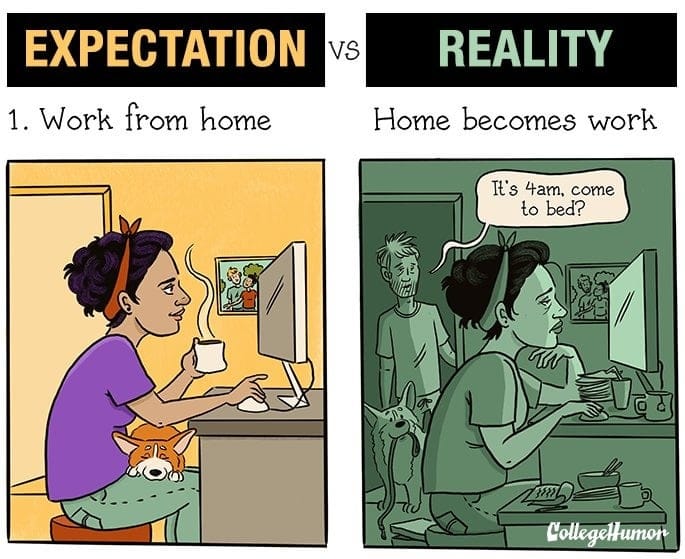
People have a perfect and stress-free picture in their mind for remote work but when you start an actual remote job then you can see reality is different.
Expectations are,
- Comfortable work from home.
- You will get more free time.
- Can spend extra time with family.
- Enjoy a flexible routine.
- Work-life balance will improve automatically.
These are the expectations of remote work that people have.
Reality of a remote job,
a. Blurred boundaries
Our home becomes an office. The boundaries between personal life and professional life get mixed and we do not understand when we start work and go to the end. People work after office hours as well.
b. More screen time
Meetings, emails, chats, and everything happens online which increases screen time. People started feeling “Zoom fatigue” because virtual meetings are very tiring.
c. Isolation
Social interaction reduces when we start to work from home. We cannot talk face to face without colleague which makes us feel lonely sometimes.
d. Time zone issues for international workers
If you live in India and work for a U.S. company then meetings can be late at night or early in the morning. You need to adjust work timing according to U.S., through which routine gets disturbed.
Conclusion
This article explored the expectations versus the reality of work-life balance in the U.S., highlighting how industry type, company culture, and remote work conditions can greatly impact your daily routine and personal time. It also covered which industries offer better balance and which ones are more demanding. Understanding these differences will help you set realistic expectations, make smarter career choices, and prepare yourself for the challenges of working in the U.S. Whether you’re planning to apply for U.S. jobs or already working with American companies, this insight will guide you toward roles that support a healthier and more balanced life.
You can explore more career blogs here.




Leave a Reply