Introduction
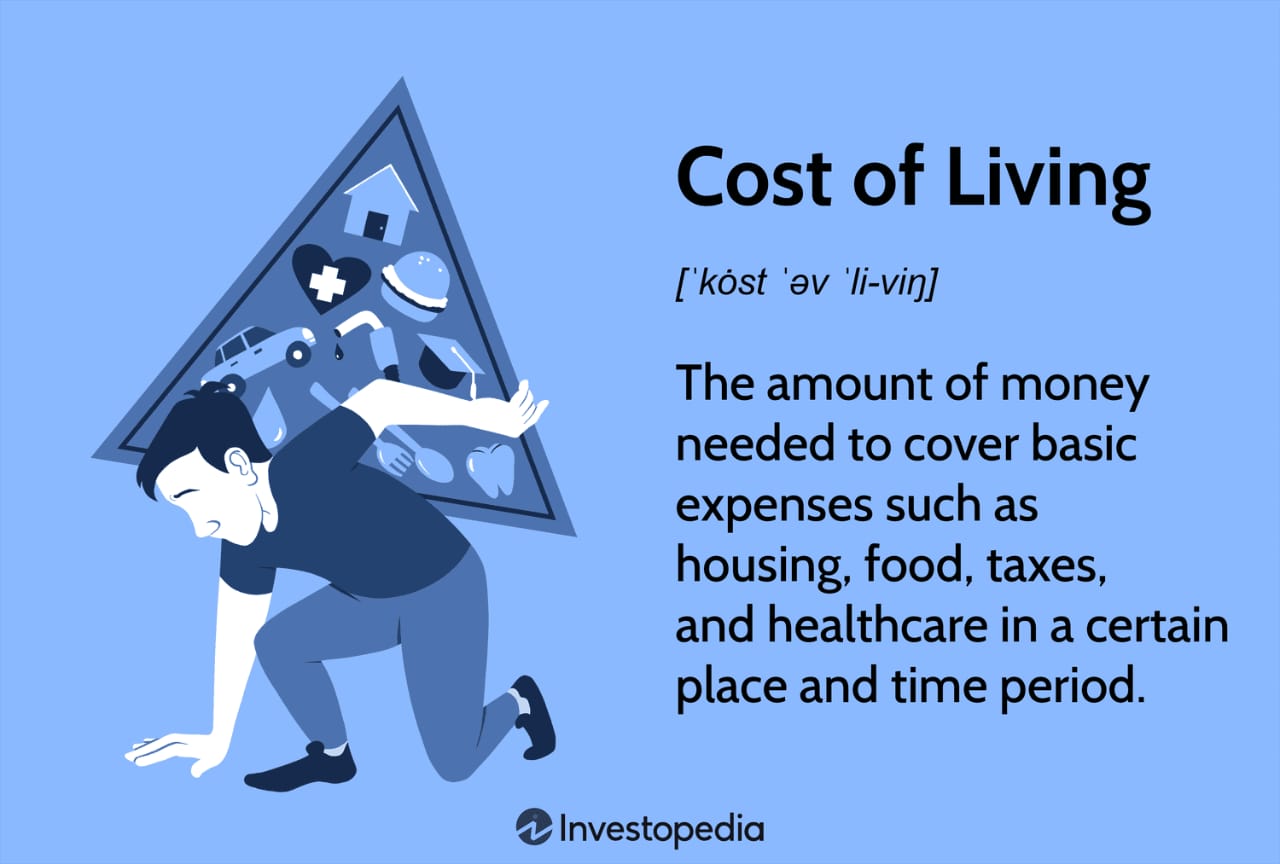
Choosing where to work and live in the United States is increasingly a financial decision. Salary numbers alone — the headline pay for an occupation or the median household income — don’t tell the whole story. Cost of living, taxes, housing, healthcare, and even local transportation can eat into paychecks, and the real question for workers is: Where does my salary buy the most? This article walks through the data, explains how to compare cost of living to wages, and identifies states that give workers the best real purchasing power today — plus practical advice so you can pick the right place for your stage of life and career.
How to judge “best for workers”?
When people ask “Which state pays the most?” the usual answer points to high median incomes in places like Massachusetts, New Jersey, or the District of Columbia. But those places also tend to be expensive. Conversely, states with low costs — Mississippi, Arkansas, and South Dakota, for example — often have lower wages, which can cancel much of the price benefit.
To answer “best for workers” we need a simple framework:
- Look at both income and prices. Use median/average wage or household income and compare it to a cost-of-living measure (housing, goods and services, healthcare, etc.). The BEA’s Regional Price Parities (RPPs) are a reliable way to compare price levels across states.
- Adjust incomes for local prices (purchasing power). Think of it as “what a salary is worth” after accounting for cost differences. Tax Foundation and other analyses commonly convert a nominal salary into “real value” or “real purchasing power” by adjusting for local prices.
- Include taxes and public services. A state’s tax regime (income tax, sales tax, property tax) affects take-home pay. States without income tax (e.g., Texas, Florida, Tennessee) can make mid-to-high wages stretch further, even if local prices aren’t the lowest. (Don’t forget local city taxes and property taxes on top of state-level rules.)
- Consider career and industry. High-paying fields (tech, finance, biotech) concentrate in expensive metros. If you’re in one of those fields, a high nominal salary in a pricey state can still be better than a low-cost, low-wage place. BLS wage data and occupational estimates can help compare pay for specific jobs.
What the national data says?
Price variation: The BEA’s RPPs show clear differences in price levels across states — coastal, high-density or island states like California, New Jersey, and Hawaii have the highest overall price levels, while states like Arkansas, Mississippi, and South Dakota are the least expensive. That means a dollar generally buys more in many interior states than on the coasts.
Income variation: Census Bureau data places median household income higher in states such as Massachusetts, New Jersey, and Maryland; the national median household income has also been rising in recent years. But higher incomes in those states often pair with much higher local prices.
Wages by occupation and state: The Bureau of Labor Statistics provides state-level occupational wage estimates — useful if you want to compare your particular role across states, rather than a general household-income figure.
These sources give a clear message: no single number tells whether a state is “best.” We must combine them and think in terms of purchasing power — what your money actually gets you on the ground.
States that often deliver the best value for workers
Below are categories of “best” states depending on career stage, industry, and priorities. For each, I’ll explain why that state or group of states tends to help workers get more from their pay.
1) Best value overall (good wages + reasonable costs): Texas, Tennessee, Florida
Why: These states often appear near the top of “best value” lists because they combine relatively competitive wages (especially in metros) with no state income tax and many affordable housing markets. Analyses that convert a $100,000 salary into local purchasing power frequently show Texas and other Sun Belt states scoring very well — particularly outside the most expensive metros. SmartAsset’s analysis and Tax Foundation purchasing-power maps show Texas metros (like El Paso, San Antonio, and Corpus Christi) where a given salary stretches further.
Who benefits: Mid-career professionals, remote workers who want low taxes, families seeking affordable housing near growing job markets. Tech, healthcare, and energy jobs in Texas often pay well while living costs remain moderate in many regions.
2) Best if you want high nominal pay and big career clusters: Massachusetts, California, Washington (metro-dependent)
Why: These states have some of the nation’s highest wages and incomes because they host high-paying industries (tech, biotech, finance). Nominal salary is highest here, but so is the cost of living: housing, childcare, and services are typically expensive. If your field commands a significant wage premium (e.g., senior software engineer, physician, specialized financial roles), the higher pay can more than offset cost differences — but it depends on your role and lifestyle. BEA RPPs put California and Massachusetts among the higher-cost states.
Who benefits: High-skilled professionals, senior-level roles, people valuing proximity to strong industry hubs and networking.
3) Best for maximizing purchasing power on mid-level incomes: Oklahoma, Arkansas, Mississippi, West Virginia
Why: These states have relatively low price levels, especially for housing and many services. On a modest wage, those low costs matter a lot. That said, wages are lower on average, so whether they’re “best” depends on the job and lifestyle. BEA data lists Arkansas and Mississippi among states with the lowest RPPs.
Who benefits: Workers who prioritize low housing costs and are willing to accept lower nominal wages in exchange for far lower essentials costs. Early-career workers or those in trades may find these states particularly budget-friendly.
4) Best for remote workers who can earn coastal wages: Idaho, Utah, parts of the Mountain West and Midwest
Why: If you can earn a salary tied to a high-cost coastal market (e.g., remote tech wages) but live where prices are lower, your purchasing power multiplies. Utah and parts of the Mountain West also offer growing job markets with decent wages and comparatively lower housing costs than the coasts. Tax-friendly policies and quality-of-life factors (outdoors, lower congestion) are bonuses. Tax Foundation and other “$100k goes further” analyses highlight mid-size metros where coastal salaries stretch a long way.
Who benefits: Remote tech employees, freelancers, entrepreneurs who can decouple workplace from residence.
5) Best for lowest taxes: Florida, Texas, Washington (state level)
Why: States with no personal income tax are appealing because they increase net pay for salaried workers regardless of price levels. Washington has high living costs in Seattle, but the absence of income tax still helps many residents. Florida and Texas often win for retired workers and remote earners because more of their income stays in their pockets.
Who benefits: High earners sensitive to taxes, retirees, and any worker wanting to maximize take-home pay.
How to choose the best state for you?
- Start with your paycheck for your job. Look up state-level wage data for your occupation on the BLS Occupational Employment and Wage site so you compare apples to apples.
- Adjust for local prices. Use BEA Regional Price Parities to see how expensive a state is overall; for metros, lean on purchasing-power maps (Tax Foundation, SmartAsset) to compare cities.
- Factor taxes. State income tax, sales tax, and property tax change how much of your salary you actually keep. States with no income tax can boost your take-home pay substantially.
- Account for housing first. Housing is the largest single variable — even small differences in rent or mortgage can eclipse wage differences. Compare typical rents and home prices for the neighborhoods you’d realistically consider.
- Consider career trajectory. If your job requires networking, proximity to a cluster matters. Early-career people often benefit from living where the industry is strong, even if costs are higher — the opportunities to learn and advance can pay off later.
- Quality of life and non-monetary costs. Commute time, air quality, access to healthcare, and schools matter. Sometimes slightly higher cost is worth large gains in health, family, or happiness.
Practical ranking: 6 worker-friendly states
Below are six states that come up repeatedly when balancing cost and wages for different worker profiles. This is not a ranked scoreboard but a practical grouping — each state fits a different kind of worker:
Texas — Best all-rounder for many workers. No state income tax, large and diversified job market (tech, energy, healthcare), many mid-size cities where housing is affordable. Buying power analyses show Texas metros often stretch salaries further.
Florida — Best for tax-sensitive workers and retirees. No state income tax, diverse job markets in healthcare, tourism, logistics. Housing varies by metro, but many inland cities are affordable.
Tennessee — Best for families seeking low cost + growing jobs. Low taxes (no income tax on wages), reasonable housing, and growing healthcare and tech sectors in Nashville and surrounding areas.
Utah — Best for strong wages + reasonable cost among mountain states. High labor-force participation, rising tech and professional jobs, and quality of life make it attractive for professionals who want growth without coastal prices.
Oklahoma / Arkansas — Best for maximizing purchasing power on modest incomes. Lower RPPs mean essentials cost less; good for trades, manufacturing, and service jobs.
Massachusetts — Best for high-earning professionals in certain fields. High median incomes and world-class professional opportunities (medicine, biotech, higher ed), but expect high costs; for professionals in these fields, nominal pay often justifies the expense.
Actionable next best steps for readers
- Find your occupation’s state wage: Use the BLS OEWS site to pull the mean/median wage for your occupation in a handful of states you’re considering.
- Adjust for local prices: Look up the BEA RPP score for those states (or metros) and convert your expected salary into “real dollars” using the RPP as a multiplier/adjuster.
- Run a tax calculator: Compare take-home pay after state/local taxes. States with no income tax often come out ahead even if prices are similar.
- Check housing specifically: Search rental and home-price data for the exact metro areas you’re considering; housing is the single biggest line item. SmartAsset & local realtor reports can help for city-level view.
- Think long-term: If your goal is career advancement, proximity to industry hubs may be worth paying more now — the salary growth and network effects can outstrip near-term savings.
Conclusion
Choosing the best U.S. state for work is not just about how much money you earn — it’s about how far that money goes. By comparing cost of living, housing, taxes, and real purchasing power with actual salary levels, workers can make smarter decisions about where to live. States like Texas, Tennessee, Florida, Utah, and many Midwest or Southern states often deliver strong value because they offer competitive wages, lower prices, and tax-friendly systems. High-cost states like California or Massachusetts provide exceptional opportunities and high salaries, but the benefits truly depend on your industry and career stage.
In short, the “best state” is the one that gives you the right balance of income, affordability, career growth, and quality of life. When you evaluate your salary in terms of real value rather than just nominal numbers, you can choose a location that supports financial stability, long-term growth, and an improved lifestyle.
Want to read more blogs? Read here.




Leave a Reply